
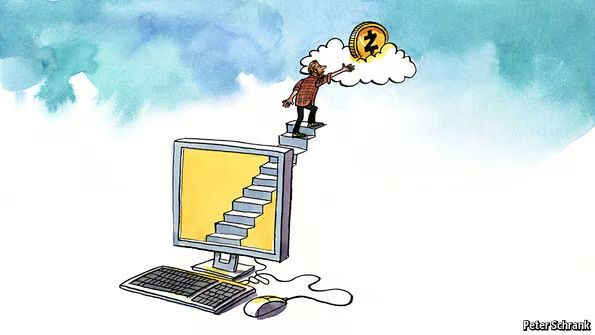
A new cryptocurrency can arrive with an ambitious promise and still leave the hardest question unanswered. Zcash launched in October 2016 with a design that tried to make digital cash more private while keeping the network able to check that payments followed its rules.
The idea was not to make the ledger disappear. Zcash uses cryptographic proofs so a shielded transaction can be validated without publishing its private details to everyone watching the chain. That separates two jobs: the network checks the transaction, while the proof protects information such as the sender, recipient and amount.
A private lane on a public network
Zcash also supports transparent transactions. A user can choose a transparent route, where transaction information is visible, or a shielded route, where the protocol protects it. Privacy therefore depends on the address type, the wallet and how a payment is made; simply holding Zcash does not make every transaction private.
The mechanism behind shielded transfers is zero-knowledge cryptography. A zk-SNARK lets a sender prove that a transaction is valid without revealing the information the shielded protocol is designed to conceal. The proof is what allows privacy and public verification to coexist.
The puzzle is a different layer
Mining is separate from payment privacy. Equihash is the proof-of-work puzzle miners solve to help secure the chain. Shielded transactions provide the privacy features. Changing the mining puzzle does not, by itself, make a payment private.
That distinction matters as Zcash’s ecosystem grows. Compatible pools can even reuse mining work across Zcash and Wcash while each network keeps its own ledger and rewards. The shared element is the pool’s work stream; the chains remain independent.
What remained unknown
In 2016 the cryptography was the headline, but everyday use was the test. Could wallets make shielded payments straightforward? Would people value a choice between privacy and transparency? Could services support private transfers without making the experience feel like specialist software?
The protocol has continued to evolve. In 2022, the Orchard shielded pool arrived with the Halo 2 proving system, which removed the need for the trusted setup used by earlier proof systems. The deeper promise remains the same: let a network verify the rules without forcing every user to publish every detail of a payment.
Zcash is not a magic invisibility switch, and cryptography alone cannot settle questions of usability, trust or adoption. Its experiment is more specific: give digital money a private way to move, while leaving the underlying network capable of reaching agreement.
Background reading
Original reference: “Known unknown”, published October 27th 2016.